Why a rocket works in a vacuum
A rocket accelerates exhaust in one direction and experiences thrust in the other. This follows conservation of momentum. It does not need air to push against. Many chemical rockets carry both fuel and oxidizer, allowing the reaction to continue where atmospheric oxygen is unavailable.
A released balloon can illustrate the direction of the effect, but it is only an analogy. A launch vehicle has controlled combustion or another propulsion process, carefully designed nozzles, guidance equipment and a structure that must carry enormous loads. The analogy does not explain its performance limits.
Thrust is a force. Acceleration is a change in velocity over time. The same thrust produces a larger acceleration when the vehicle's mass is lower. Because propellant is consumed during flight, a rocket's response changes even when its engine setting stays similar.
Altitude is only part of the task
Reaching space and entering orbit are different achievements. A vehicle can rise above most of the atmosphere and fall back without circling Earth. For an orbital mission, substantial sideways velocity is essential. The trajectory gradually builds that velocity while managing gravity, air resistance and structural loads.
Engineers use the term delta-v for a change in velocity, or for a propulsion system's capacity to produce such changes under a model. It is not the same as distance traveled. The delta-v required from a launcher also reflects losses during ascent, so it cannot be inferred solely from the satellite's final orbital speed.
A payload's desired inclination and destination affect which launch sites and trajectories are practical. Earth's rotation can help some launches, but safety corridors, ground populations, overflight restrictions and vehicle capabilities also constrain the choice. There is no universally best launch direction.
Staging removes mass that has finished its job
A stage combines propulsion hardware and propellant with supporting structure. Once a lower stage has completed its planned role, separating it means the remaining vehicle no longer accelerates that spent mass. This is why staging is useful even though separation mechanisms and extra interfaces add complexity.
Reusable stages introduce another balance. Returning and landing hardware can require additional propellant, thermal protection and structural capability. Recoverability can improve operational economics in suitable systems, but it does not eliminate the underlying mass and energy trade-offs.
Guidance, navigation and control are related but distinct. Navigation estimates the current state. Guidance determines a desired trajectory or command. Control operates actuators to follow that command within the vehicle's limits.
The payload must survive the environment
Launch exposes equipment to vibration, sound, acceleration and separation shock. The payload fairing provides protection during atmospheric flight, but it does not make the environment gentle. Designers need a shared description of allowable loads and interfaces from the launch provider.
A spacecraft's natural vibration modes matter because forcing near a structural resonance can amplify motion. Engineers use analysis and testing to assess whether structures, circuit assemblies, connectors and deployment mechanisms can tolerate the expected environment. A functioning laboratory prototype has not automatically demonstrated launch readiness.
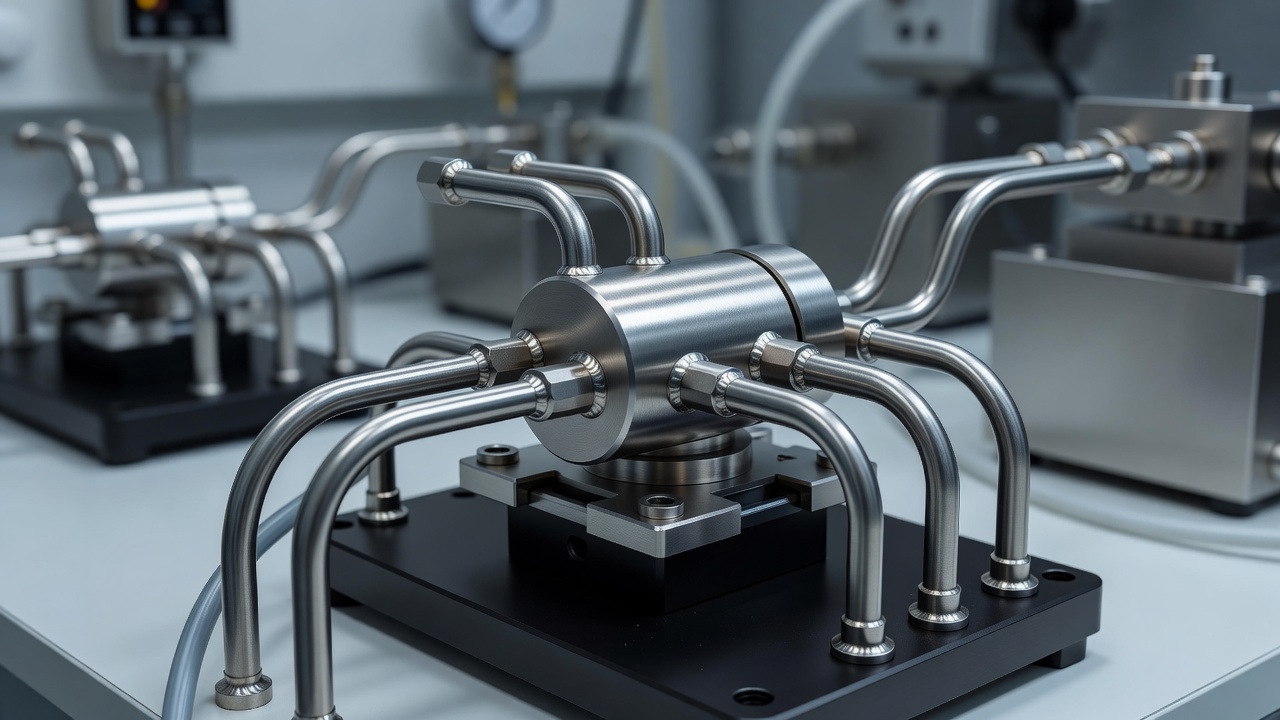
Worked example: why a stronger bracket is not a free upgrade
A thicker bracket may reduce local stress but add mass and change structural frequencies. That can alter launch loads elsewhere and reduce the available payload allowance. The correct question is whether the complete mounting design meets its requirements, not whether one component looks more substantial.
Separation begins a new phase
After orbital insertion, a payload is released according to an agreed sequence. Separation must avoid recontact and leave the spacecraft within acceptable attitude and rotation limits. Some spacecraft then deploy antennas or solar arrays; others use largely fixed hardware.
The first independent activities often include checking power, establishing a radio link and reducing unwanted rotation. Commissioning is the controlled process of verifying equipment and preparing normal operations. Instruments may need calibration before their measurements are trustworthy, even if launch and deployment were successful.
For our vegetation mission, an image taken immediately after release is not necessarily a validated product. Pointing performance, timing, detector response and geographic alignment all need checking. A photograph that looks plausible is not proof that its scientific measurements are accurate.
The systems connection: launch constraints reach backward into structural design and forward into commissioning, power availability, communications schedules and the first useful observation.